The brief that started it
A Queensland mining services firm came to us with a familiar problem: fifty-four delegates flying into Cairns for the annual offsite, three consecutive years of hotel conference rooms behind them, and engagement scores that kept sliding.
The brief was honest. Morning sessions had to carry real strategy work, the afternoon had to feel like a reward, and the evening needed to produce the kind of memory that outlasts a catering invoice. Budget sat at standard corporate retreat money.
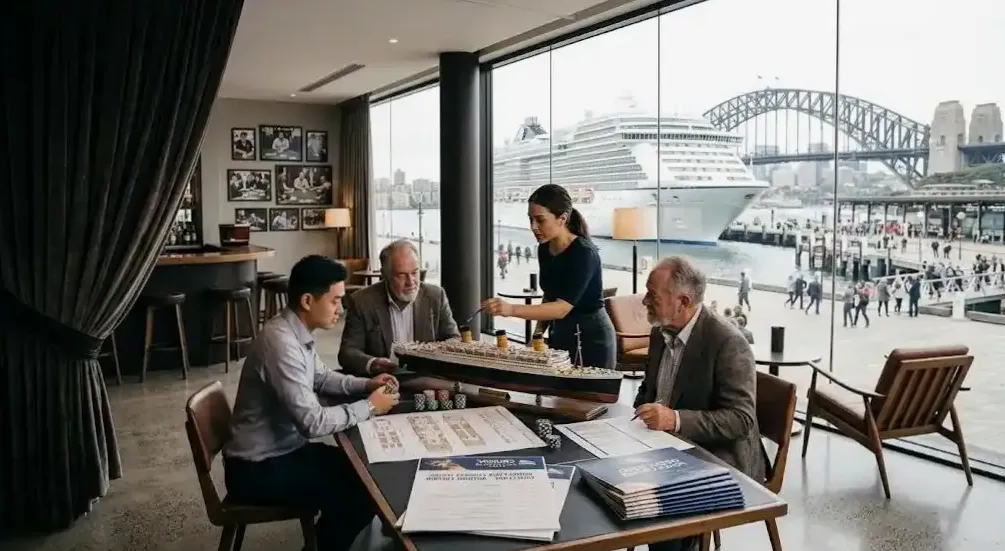
We proposed the Corporate Poker Summit format: conference deck until lunch, workshops until mid-afternoon, then a branded company tournament to close.
The format we built
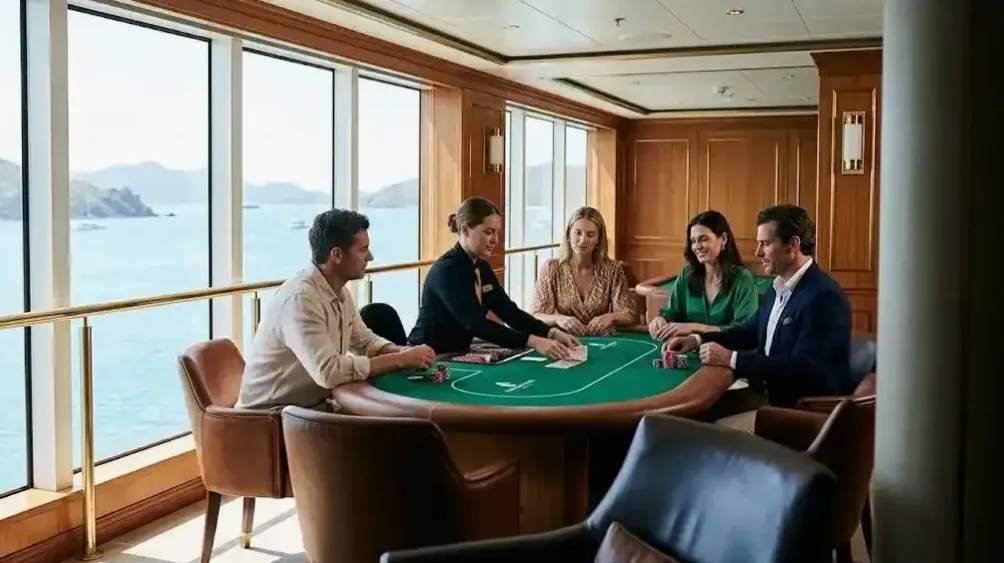
The morning ran as a genuine conference: their own speakers, our AV, harbour views where a projector wall would normally be. The difference attendees noticed was air and light rather than novelty.
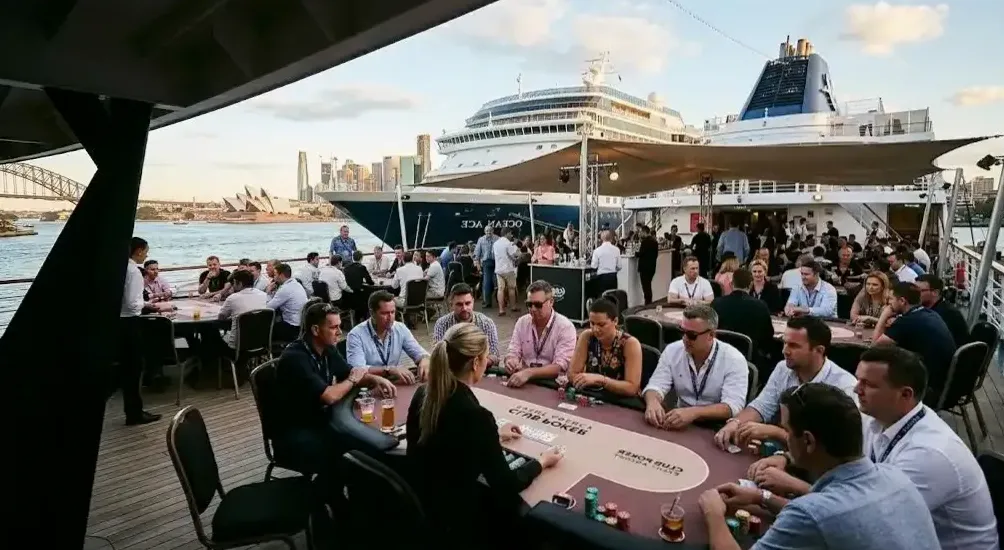
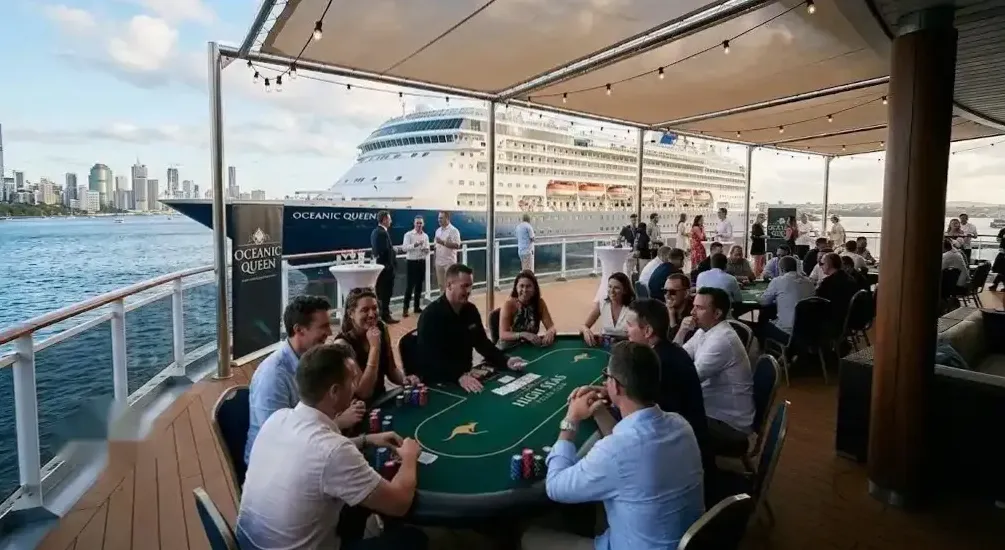
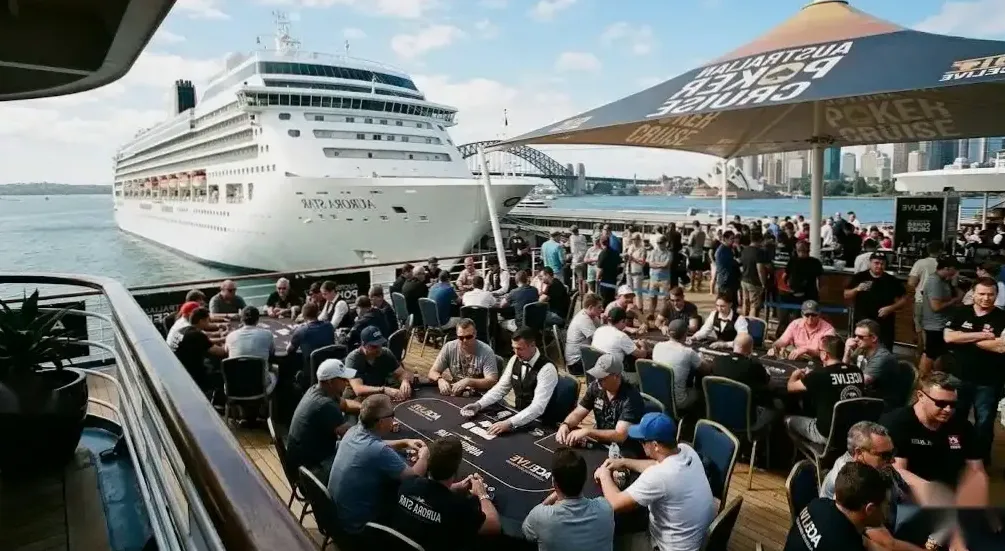
The tournament was designed for a room where half the delegates had never played. We ran a learn-to-play clinic while the floor reset, then a two-flight structure so nobody busted in the first hour. Fun money converted to prizes, which matters for companies with gambling policies.
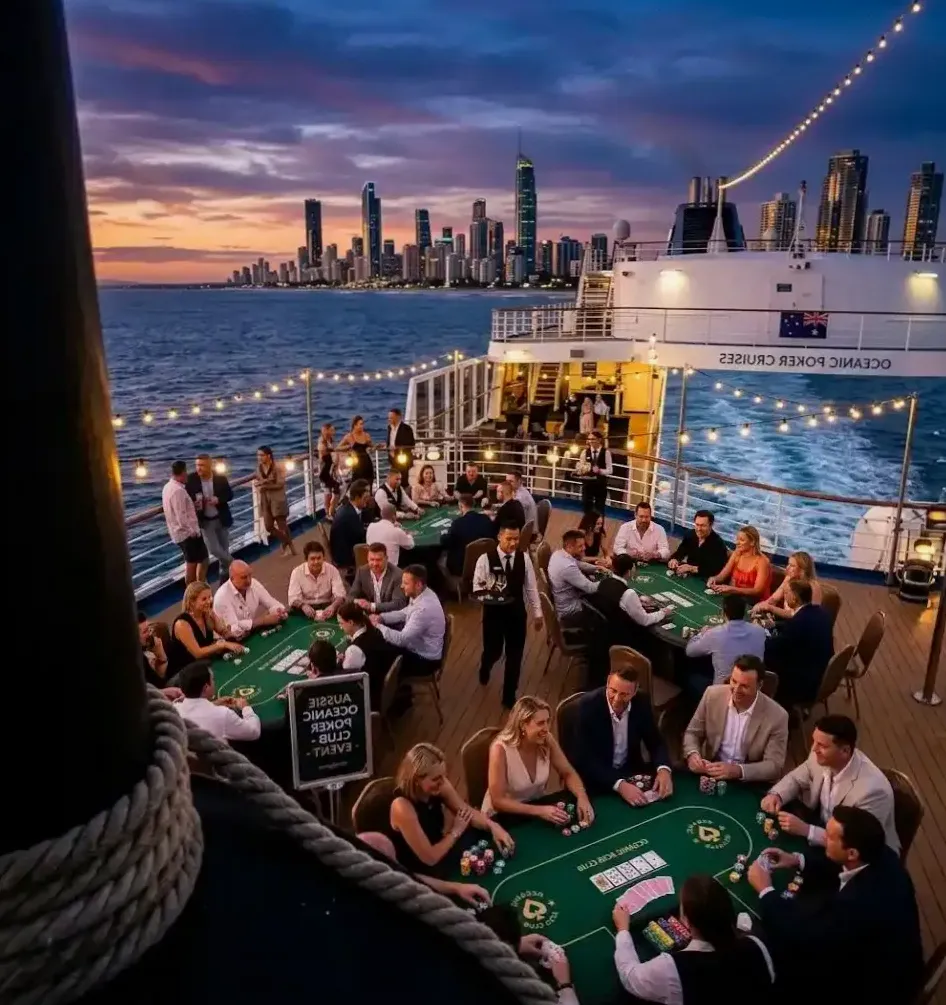
Branding went further than a logo on a screen. The felt, the trophy and the leaderboard graphics carried the company identity, and the internal comms team left with a photo library they are still using.
"The conference morning looked like every other offsite. By midnight the losing VP was demanding a rematch clause in next year's budget."
How the day actually ran
Delegates boarded at 09:00 to coffee on the conference deck. Sessions ran to 13:00 with the catered working lunch nobody left early for. Afternoon workshops used our facilitated debrief format, linking table dynamics back to the negotiation themes their L&D lead had requested.
The floor converted in forty minutes: conference tables out, six tournament tables with branded felt in. The learn-to-play clinic ran at 16:00 and the tournament opened at 16:45 with every delegate playing.
The finale played out to 19:30 with the losing division's VP knocked out by their receptionist on the final table bubble, which is the moment the company still references in meetings.
What the numbers said afterwards
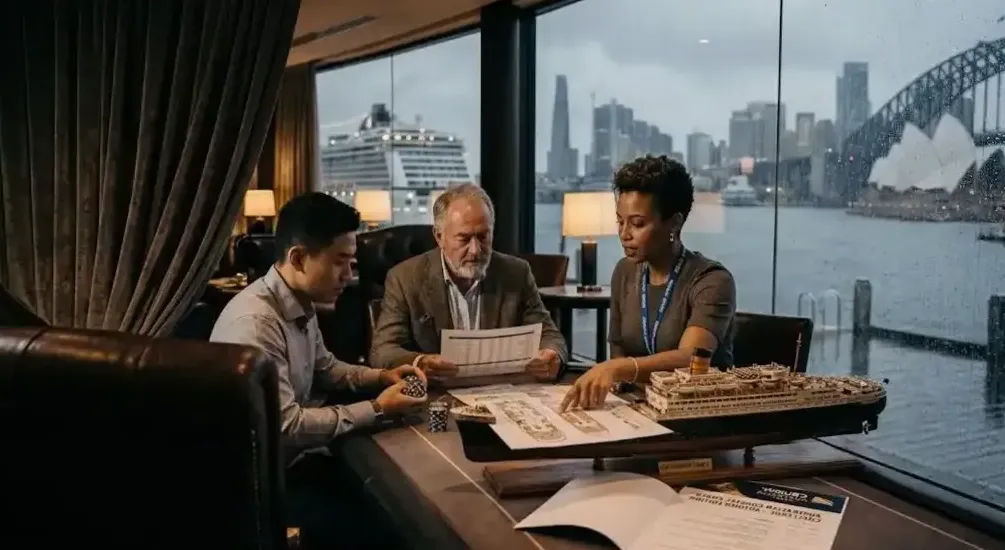
Post-event survey scores ran 4.8 from 5 against 3.6 the previous year. Attendance was 54 from 54 invited, a first for this client, and the internal photo library generated more intranet engagement than the entire strategy morning.
The cost landed within five percent of their previous hotel format once transfers and catering equalised. The People & Culture lead's assessment was that the offsite finally stopped being an obligation.
Two details mattered most in hindsight: every delegate played regardless of experience, and the trophy presentation gave the CEO a better closing note than any slide had managed in three years.
- Book the learn-to-play clinic. It converts half the room from spectators to players inside thirty minutes.
- Fun money formats satisfy most corporate gambling policies. Confirm with your compliance team early.
- Branded felt and trophy are worth the line item. The photos carry the event internally for months.
- Sixty delegates is the comfortable cap on the summit deck. Larger groups should look at the full charter.
- Two-day formats suit strategy-heavy agendas. A single day is tight if the morning content matters.
What we would do again, and differently
The format is now their annual fixture, and we have repeated the same structure for four other firms since. The learn-to-play clinic before the tournament is the piece we would never drop; it is what makes a mixed-experience room work.
If we were changing anything it would be scheduling: this client now books the two-day format with a second conference morning, because one day felt compressed for the strategy content they wanted.
For companies weighing the same decision, the honest advice is to match the format to the objective. Celebration-first groups suit the themed casino nights; business-first offsites suit the summit. Both beat a hotel room.