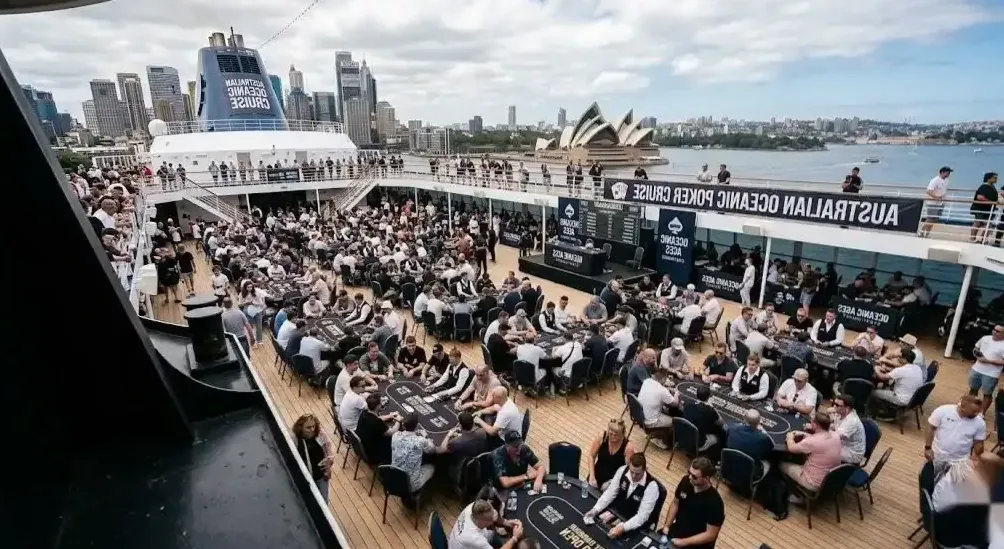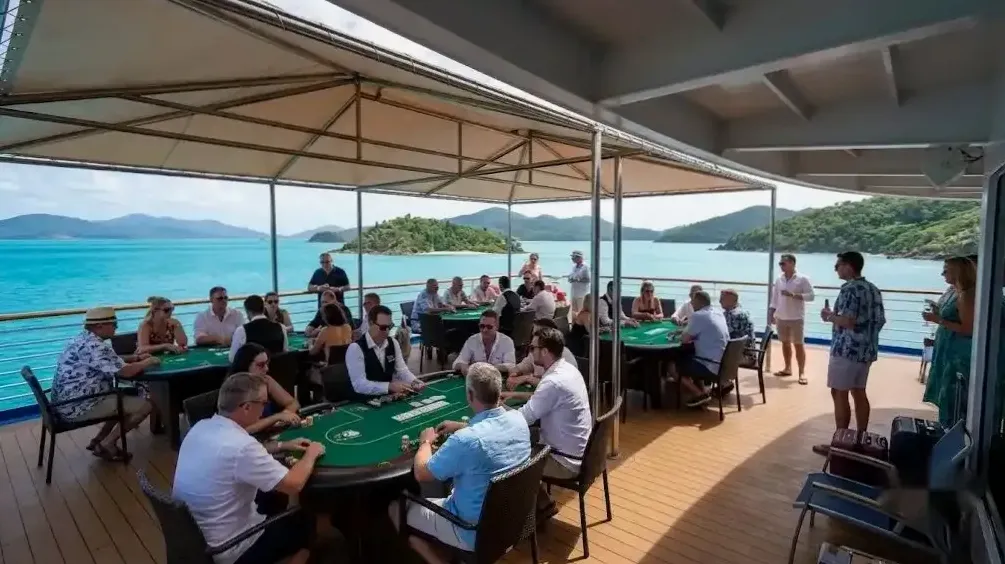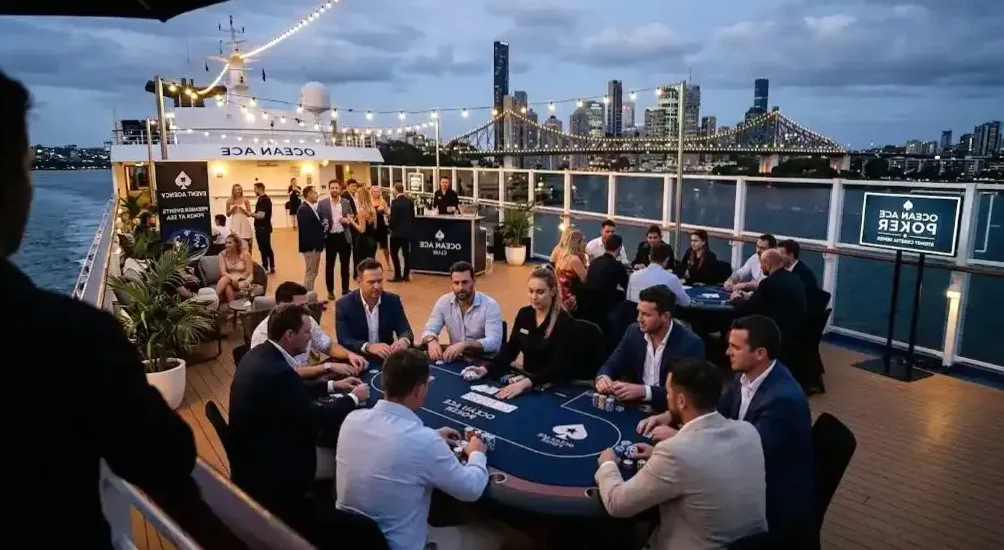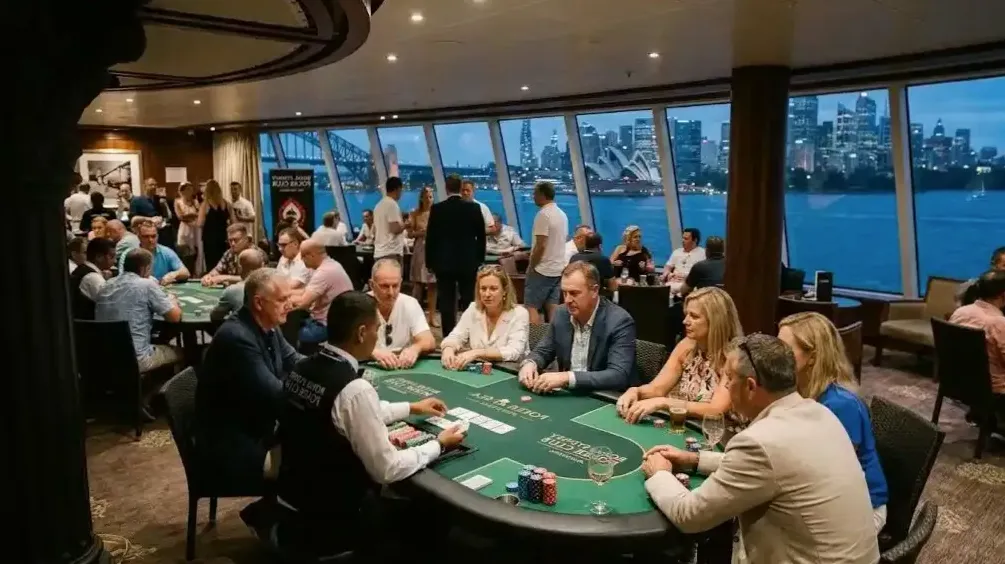
The room itself
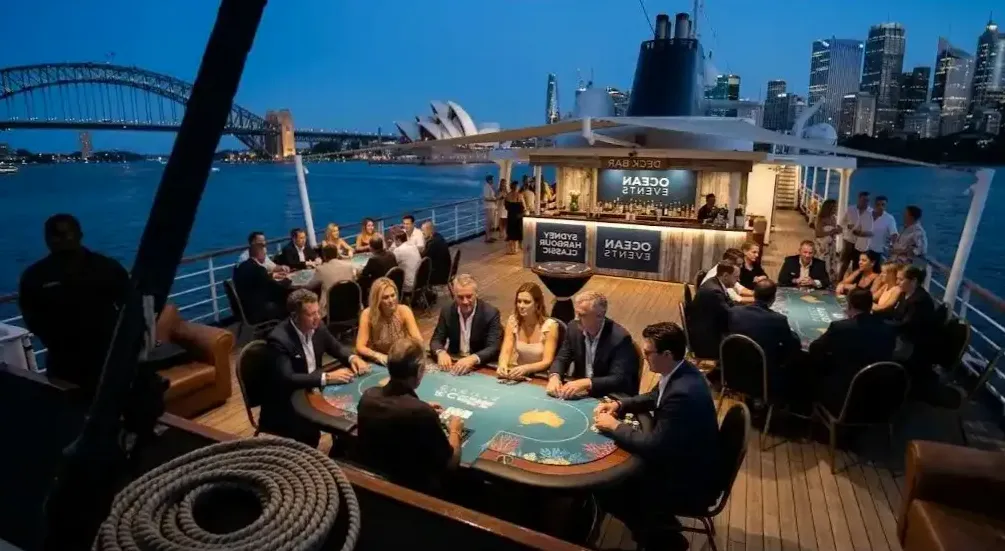
The salon occupies the upper deck's private wing: six tables, a staffed bar, a dining room and a cashier desk that serves forty guests alone. It is deliberately quiet. The music stays low, the lighting stays warm, and the noise of the main casino floor does not reach it.
The design brief was a private club, not a casino. Timber, leather and felt in the classic register, with the water through the windows doing the decorative work. Players describe the room as the kind of place a serious game deserves.
Camera policy is simple: none without your consent. The salon package exists for guests who want the game without the performance of being seen playing it.
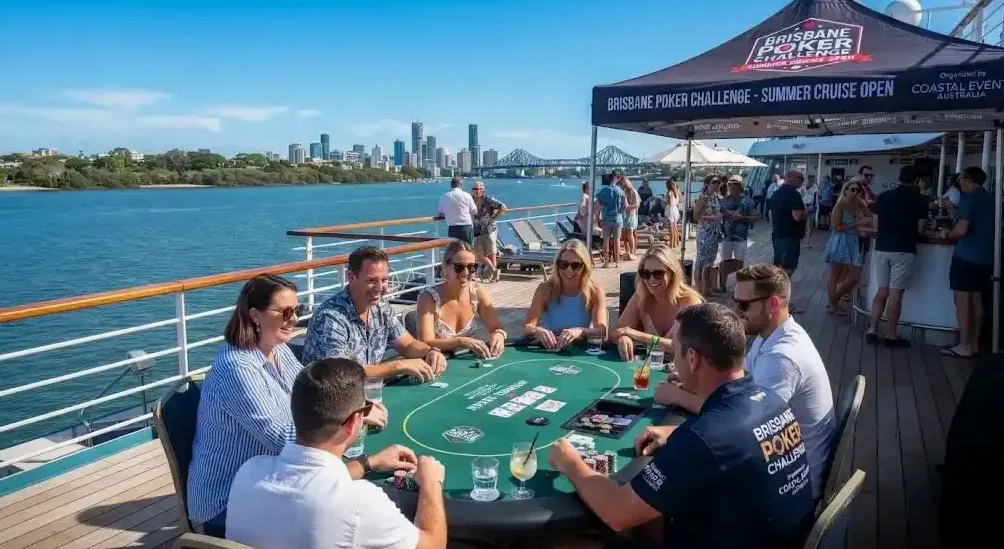
Who actually plays there
The room mixes three populations. The regulars are mostly business owners and professionals from Brisbane and Sydney who fly up for the weekend. The visitors are international players passing through who found us by reputation. The invited few are strong local players we seat deliberately to keep games honest.
What they share is temperament: the salon does not suit players who need the room to know they are winning. Big pots change hands with a nod. Celebrations are quiet and bad beats are quieter.
The host team knows the regulars' preferences: which seat, which game, which drink at which hour. That continuity is what turns a poker room into a club.
"The salon is the only room we run where the dress code is unwritten, the buy-in is unadvertised and the waiting list is the marketing."
The games and the stakes
No Limit Hold'em and Pot Limit Omaha run every night, opening at A$5,000 buy-ins. Short deck and mixed formats deal on request when a full table asks, which happens more often than outsiders expect.
Stakes are honest rather than performative. The room is not for players who want to be seen at a big game; it is for players who want a good game. The distinction shows in the average pot, which is meaningful without being theatrical.
Games open at 19:00 and run until the room decides, which has meant 03:00 on occasion and midnight on others. The cashier settles whenever your session ends.
The service standard
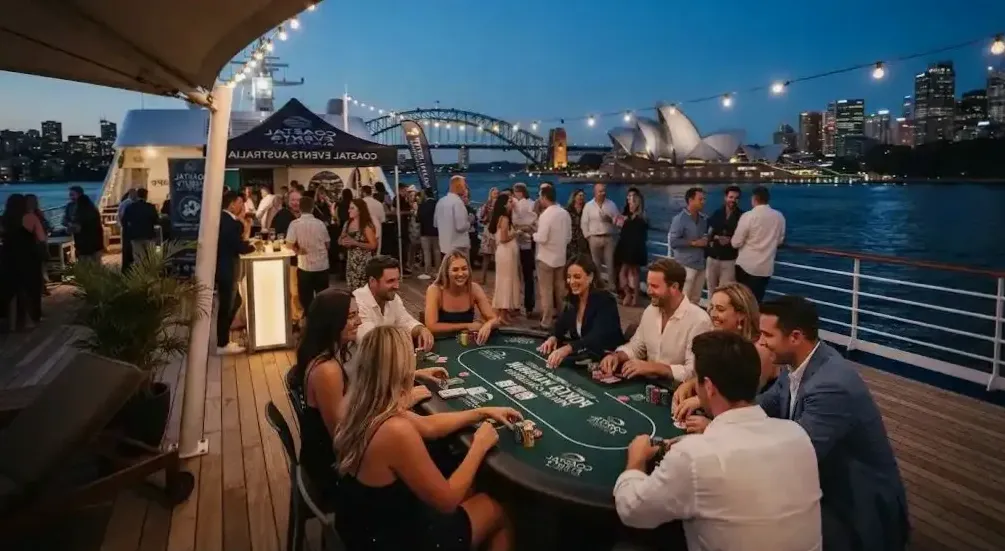
Salon service is built around one principle: the hand is sacred. Drinks arrive between hands, food is plated to be eaten in four bites, and staff read the table before approaching it.
The chef's counter menu runs until the last table breaks, which is the kitchen's commitment rather than a courtesy. Players who have eaten at three in the morning aboard know the galley means it.
The cashier desk handles buy-ins, settlements and wire transfers with the same discretion as the dealers. Your business in the salon stays in the salon; that applies to staff as much as to guests.
- The salon suits players who want a good game, not a seen game. That distinction is the whole room.
- Buy-ins open at A$5,000 with Hold'em and Omaha nightly. Other formats deal on request for a full table.
- Suites on the salon deck are included in the voyage package. The walk back after a session is under a minute.
- New applicants should allow a week for the host call and seating approval.
- Returning guests book first. Most new seats open when a regular's schedule changes rather than on a fixed calendar.
Getting a seat
Admission is by request, not by purchase. The host team speaks with every new applicant to check the room suits them: preferred game, expected stakes and the temperament the room runs on. The call takes twenty minutes and is the reason the salon keeps its character.
Suite packages include the salon across the voyage, and the room caps at forty guests so the games stay uncrowded. Returning guests book first; new applicants typically wait one to two sailings for an opening.
For players ready to ask, the concierge desk passes requests to the host team. For players deciding whether the room suits them, the first cruise guide describes the public formats where most salon regulars started.